You may not hear it when you lose a tire, but you’ll definitely feel it. Sometimes, a tire just deflates, like a balloon, and your car will suddenly start pulling to the left or right. Sometimes, you will hear a “pop” before the pulling. And occasionally, if you’re really unlucky, the tire will virtually disintegrate - the tread will separate from the sidewall, which will itself blow out in a cloud of dust and smoke, leaving you driving on metal.
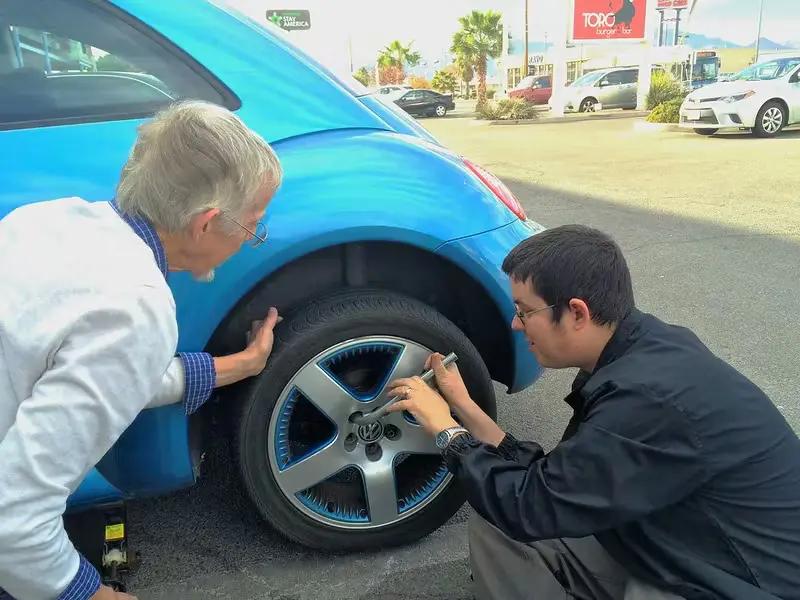
You can’t keep driving on a blown out tire, obviously, though it has been tried. But, despite what your instincts tell you, don’t break or head for the side of the road immediately. You should first give the car a little gas and steer straight ahead to stabilize the vehicle. Turning the wheel or slamming on the breaks could put you into a spin. Once you have stabilized the vehicle, let the car coast down to below 30 mph before carefully pulling off the main roadway. Once you’re safely on the shoulder of the road, call for roadside assistance or change your tire yourself, if you have a spare and are handy with a jack.
What Causes A Tire Blowout
Under-inflation. And maybe over-inflation. Or a pothole. Or too much cargo.
The fact is, a lot of things can stress a tire. Underinflated tires cause the sidewalls to stretch, especially when the car is loaded with cargo. If you’ve ever bent a wire or thin piece of metal back and forth until it snaps, that is what your sidewalls are doing when underinflated. You can also put extra pressure on your tires when you over-inflate, then head into warm weather, causing the air inside the tires to expand further - summer is when most blowouts occur. And, of course, a pothole or hitting a curb can kill a tire. Sometimes, it is instant death, while other times, you’ll merely damage the tire and create a ticking time bomb that goes off when it gets hot outside or the car is overloaded with cargo and passengers.
One more cause: poor tire health. Damaged tires can crack, bubble up, or warp. Check the DOT codes on your tire as well to make sure they aren’t past their expiration date or have been recalled. Yep, like milk, tires expire.
Tire Blowout Statistics
Here is the one statistic you need to know: in 2017 alone, 738 people died in tire-related accidents. Okay, that sounds bad, so maybe we need another statistic: according to the National Highway Traffic Safety Association (NHTSA) Americans drove more than 3.2 trillion miles.
Put those numbers in perspective: the odds of dying in an accident are slim given the number of miles we travel.
Nonetheless, reducing the possibility of a blowout is a matter of maintenance: proper tire pressures and periodic examination of your tires’ condition are simple preventative measures that anyone can do.
Tire Blowout Accident
What happens in a blowout? Pop, whack, whack, whack, and the terrifying sensation of your car pulling severely to the side, making your vehicle extremely hard to control.
How do you survive? A great article in Popular Mechanics by a former tire company employee who formerly taught people how to control their car in a blowout details the proper procedure:
- Press the accelerator to maintain speed. (You probably won’t speed up given the drag of a missing tire, and rapid changes of speed compromise stability.)
- Use two hands (drop the cheeseburger) and keep the car headed straight.
- Do not brake. Rather, coast and your car will decelerate rapidly.
- Do not turn the steering wheel until the car slows to below 30 mph, then carefully pilot your car to a safe location.
What happens if you panic and pull the wheel? If it is a front wheel, steering can become very difficult. If it is a rear wheel, pulling the wheel can put your car into a spin.
Front Tire Blowout
As mentioned, if a front tire blows out, it becomes extremely difficult to steer your vehicle, especially at highway speed. Your car will pull severely in the direction of the tire that turned to dust. Many people will instinctively concede to the wishes of their Goodyear Eagles and turn the wheel toward the direction of the pulling - or rapidly over-correct. Both are dangerous and can spin the car out of control. Instead, correct as necessary to keep moving in a straight line until you have slowed way down.
Compare that with a rear-wheel blowout. Because you have little to no control over your rear wheels, you can’t correct for the pulling. Instead, the rear of your vehicle will sway back and forth. Braking makes the swaying worse and can put you into a spin - as with a front-wheel blowout, staying straight and letting the car slow on its own is the best way forward.
Getting Back on the Road
Once you’ve slowed way down, and pulled over, you’ll want to get back on your way. Change your tire - assuming you have a spare and the know-how to do it. Or call your roadside assistance provider and get a tow to the nearest tire shop.
Obviously, you’ll need a new tire. You might need two - you don’t want to drive with one new tire and one well-worn one. Also, if you traveled a long distance on a blowout, you may have done damage to your rims. It’s also possible that existing damage to the rim, from a pothole or curb, contributed to the blowout. Long story short, make sure you ask the tire shop to inspect the rim while replacing the tire(s).
And in the future, remember to keep your tires inflated and inspected for warping, cracking, bubbling, or any other signs of deterioration.
This information on this site is provided solely for informational purposes. It is not legal advice. Off The Record is not a law firm, does not provide legal services, and is not a lawyer referral service. The attorney listings on the site are paid attorney advertisements. Off the Record has not evaluated this content for accuracy, completeness, or changes in law. No representation is made here about your specific rights. Off The Record is not a substitute for an attorney or a law firm. Legal advice can only be provided by a licensed lawyer.
Image credit: garlandcannon License: CC BY 2.0

 Off the Record