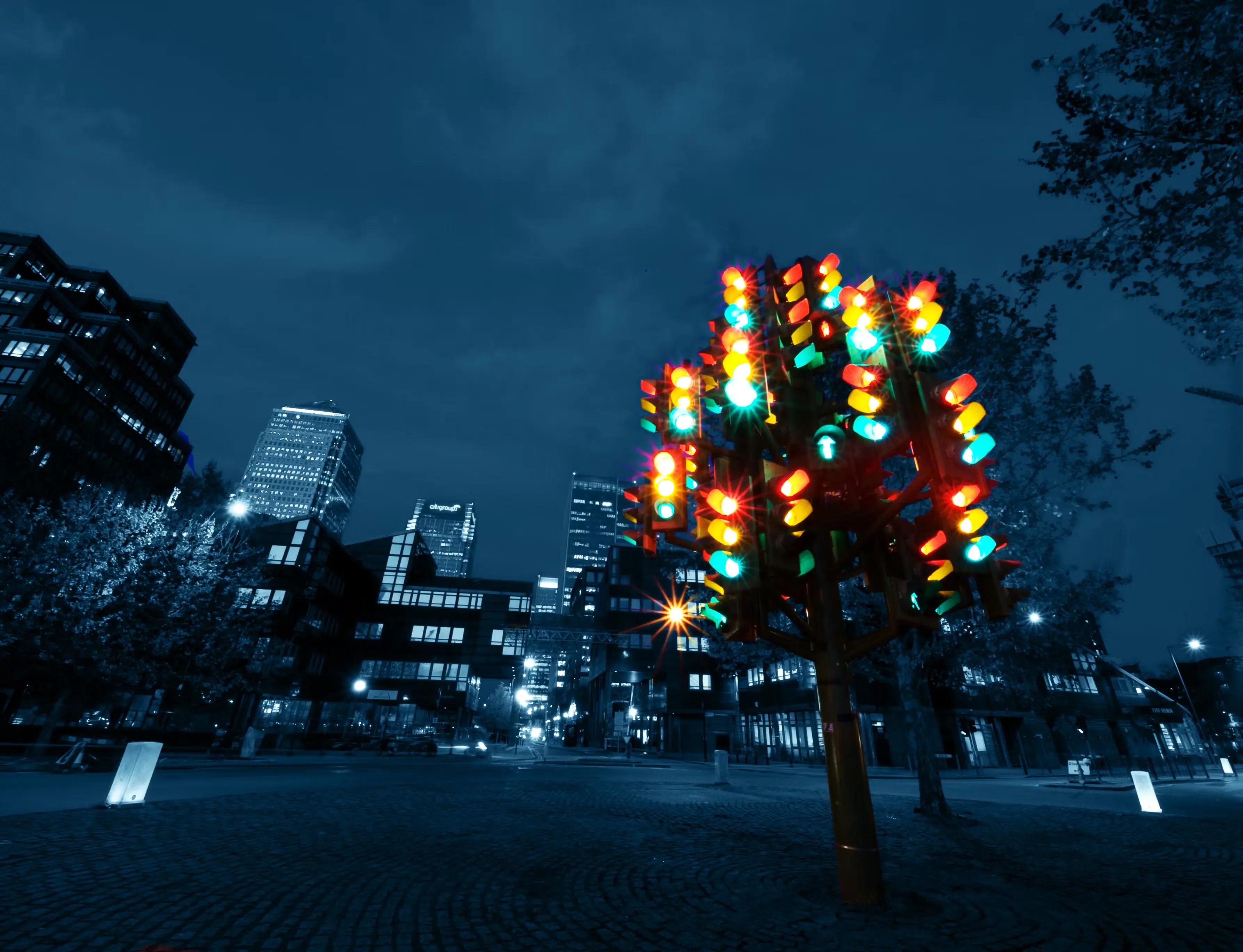
When history looks back at the age of automation, the time in which artificial intelligence, computerized machines, and other technical trickery replaced the bulk of the human labor force, sending the world into economically stratified anarchy, one wonders if the outsourcing of law enforcement to those little red light cameras will figure as a milestone on the path to despair.
Which cameras? Those darn traffic enforcement cameras - known by many as “red light” cameras, but increasingly including speed and toll enforcement cameras. These cameras, which can be harder to spot than a police cruiser hidden behind a bush in rural Missouri, enforce the law by snapping photos of the offender. It's cruelly efficient: no need to pull someone over and risk an accident, or pay police officers, when a camera can simply snap a photo and a computer mails out a ticket.
How do you fight these red light cameras, and the age of machines that will inevitably result from their increased adoption?
What Does A Red Light Camera Look Like?
How do you recognize a red light camera? For most people, they never will. Cameras are silent assassins that capture alleged traffic crimes and then pass along a bill. Of course, you may notice the flash as it takes your picture, but by then, it is far too late. If your goal is to scout out the cameras in advance or just squint and try to identify a camera before deciding whether or not to run a red light, maybe just don't run that red light. But the cameras are generally either round hemispheres or the traditional rectangular security camera, fixed atop traffic light posts. They may also be attached to the top of roving unmarked police vehicles.
If you're really curious about what they look like, or simply want to know where they are located, there are a couple of great ways to find the location of cameras near you. The first, which is especially handy while driving, is to use a crowdsourced app for navigation like Waze. The user base on Waze tags cameras as they are spotted, allowing you and other drivers to heed the app’s robotic warning: “Caution, red light camera ahead.” War of the machines indeed.
You can also Google it. There are a number of websites that map out cameras near you. WNYC has a map of local New York City speed cameras, while PhotoEnforced.com maintains crowd-sourced maps of cameras nationwide. As both rely upon user-submitted data, their accuracy is not guaranteed.
How Do You Know If A Red Light Camera Caught You?
The flash! Just kidding. In fact, some of the cameras in New York City flash regardless of whether or not you broke the law. Not to worry: the flash is just the government surveillance state keeping us safe by tracking our every single move.
In all seriousness though, the only way you will know whether a red light camera caught you is when you get the ticket in the mail. It is all very efficient. The camera takes photos of your vehicle, it reads the license plate number, pulls your vehicle registration records, and the software spits out the ticket. Some technician will likely provide a quick human review and sign the form, before the ticket is then mailed to you. It all usually happens within a couple weeks of the date of the offense.
Of course, this all assumes that the person driving the vehicle (you) is also the registered owner of the car. Oftentimes, the driver is actually a friend or relative who has borrowed the car, in which case, an awkward conversation will soon ensue: “Baby, were you driving the Rockaway freeway on Tuesday at 3pm? Because I know it wasn’t me - I work from home. And that’s right next to your work.” (This conversation may have happened just last week.)
If the vehicle is a rental, the rental car agency will likely either provide the information of the person who rented the vehicle at the time of the offense to the ticketing authority, or they will bill you themselves (with a substantial markup likely). Hertz, for example, will charge the renter an administrative fee and the renter is still responsible for the underlying ticket.
Red Light Camera Ticket Cost
It would be impossible to outline every single red light fine in America because, as with all legal issues, it varies by locality. But we can use New York City as a pretty telling example of how most jurisdictions structure their red light ticket (and other camera ticket) fines.
- Driver A ran a red light and was caught by a living, breathing police officer. This police officer cited him for failure to obey a traffic control device. Unfortunately, the driver was found guilty. He faces a fine of up to $150, administrative fees and surcharges of $80, two points added to his license, and up to 15 days in jail. Almost nobody gets jail time for a red light ticket, but it is an option if the judge is feeling cranky or if the offender is the sort of guy who does dangerous stuff with his car on a regular basis.
- Driver B is a gorgeous medical resident who ran a red light camera on her way to the hospital to save lives. Unfortunately, due to her busy schedule, she did not contest the ticket and instead plead guilty by mail. It only cost her $50, plus administrative fees of approximately $30. She will not receive any points on her license, her insurance will not be affected, and she does not face any jail time whatsoever.
Two drivers. Same offense: running a red light. As you can see, the camera tickets are a lot cheaper and carry far fewer consequences, then tickets handed out by real life police officers. Why? A popular conspiracy theory is that the fines are intentionally low so that the municipalities can collect as many tickets as possible, while facing far fewer legal challenges from people who would rather pay the minimal fine then spend the time to fight the ticket. Just think about it: as a consumer with a ticket in hand, which would you rather do:
- Pay the $50 fine, plus $30 in admin costs.
- Spend hours, and even days, fighting the ticket by mail (where you often lose) or in person (where you take an entire day off to sit at the DMV and may also lose).
- Research lawyers and hire one, hoping that you aren’t paying a lawyer to lose a case. (Note: we connect you with a lawyer and a money-back guarantee!)
There are legitimate questions about whether these camera tickets are constitutional at all: you can’t confront your accuser when your accuser is a camera, and these trial-by-mail, guilty-until-proven-innocent affairs are about as offensive to the notion of a fair legal system as you can get. The cities, therefore, definitely incentivize paying that ticket quickly and painlessly so that nobody will take the tickets to court, where the law might eventually be struck down.
How to Fight a Red Light Camera Ticket
You can, and you should, fight a red light camera ticket. Why? $50 may not seem like enough reason to fight back. But this is how it begins. They chip away at our freedoms one red light ticket at a time. $50 here, $45 parking ticket there. Then they use the proceeds from those tickets to add more cameras and more tickets. Next thing you know, you’ll have robots skimming your trash and citing you for failure to sort your recyclables properly. Or automated tickets for not keeping your lawn mowed. The age of machine enforcement is upon us, the war on automation has begun, and camera tickets are just the first battle.
And besides all that paranoia, it's just plain unamerican to set up a surveillance state and find people guilty until proven innocent. So, how do we take on these robo cameras and strike a blow for freedom?
The most common defense is one of mistaken identity: you argue that someone else has borrowed your car and should therefore be responsible for the ticket. Whether or not this works will depend largely on your jurisdiction.
- In New York, it probably won't work - the owner is responsible unless the vehicle was leased out to a third party, the leasing arrangement was registered with the state in advance of the ticket, and the owner-lessor provides the name of the lessee to the ticket bureau. (Comically, the vehicle owner is allowed to file for indemnification against the true driver, making the driver responsible for the fine, but given that the fine is capped at $50, it is a near certainty that only a bored lawyer would even consider doing that much paperwork to reassign a fine.).
- In Washington state, it's a bit more complicated. You do not have to provide the name of the actual driver - simply attesting under oath to the fact you weren’t driving will get you out of the ticket. Even if the camera caught your gleeful face as you careened through the red light, the state cannot use the pictures to identify people inside the vehicle. We know what you are thinking: that is a very strong motivation for lying. However, we do not condone perjury. It is actually a very serious crime to lie under oath.
- In California, despite scary language typically included on camera tickets, there is no requirement for you to rat out the actual driver. The cameras may capture your face, however, and local authorities may compare the face of the driver to your DMV records and possibly those of the people who live with you as well.
If mistaken identity is not applicable, you’ll have to get creative with your defense. Take a close look at the photos provided with the ticket. Is it your car? Sometimes the cameras can malfunction and they may capture both your car and another car that is passing you. Other malfunctions are not unheard of either. Obviously, if you have other extenuating circumstances, such as running the red light during a medical emergency and you can prove it, a judge will likely be sympathetic as well.
There is also the option of digging into the minutiae of the actual statute. New York’s speed camera statute, for example, requires that two photos of your vehicle be taken with the same statutory object captured in both photos as a reference point. That is a very specific requirement and if there are no statutory objects, such as a tree or light post, that are recognizable in both photos, you may be off the hook. Of course, that is the school speed zone camera ticket statute. Depending on whether you are fighting one of those, a red light ticket, or a toll ticket, you will have to parse the dense text of the laws to find all of the requirements and compare them with your ticket and the evidence.
Hire a Lawyer With a Few Taps
If defending yourself sounds intimidating, it is. That is exactly the intention of those who crafted these laws. They make the penalty small, at least on a ticket by ticket basis, but they collect tens of millions of dollars in revenue from these tickets each year.
If you fight back, you are probably correct that it is not worth the many hours it would take for you to handle this alone. After all, you are not an expert in local automatic traffic enforcement camera laws and regulations. Instead, hire a lawyer who handles these matters on a regular basis to deal with all the legal minutiae for you. Not only does it mean that you may get out of the ticket, but it you will also be striking a blow for the Common Man against our big brother robotic overlords. And what could be more patriotic and American than that?
Getting started is simple with Off The Record. A few clicks and questions on our site or IOS app, plus a picture of your ticket, is all that it takes to connect with a local attorney. Plus, you don't have to worry about losing: all attorneys that agree to take cases on Off The Record agree to abide by the Off The Record money back guarantee. This means that they agree refund the fee that you pay if you do not prevail. The high success rates of Off The Record attorneys are based on a business model that depends on pairing you with an attorney that routinely beats these types of tickets in your local court.
This information on this site is provided solely for informational purposes. It is not legal advice. Off The Record is not a law firm, does not provide legal services, and is not a lawyer referral service. The attorney listings on the site are paid attorney advertisements. Off the Record has not evaluated this content for accuracy, completeness, or changes in law. No representation is made here about your specific rights. Off The Record is not a substitute for an attorney or a law firm. Legal advice can only be provided by a licensed lawyer.
Photo courtesy William Warby Attribution 2.0 Generic (CC BY 2.0)

 Off the Record