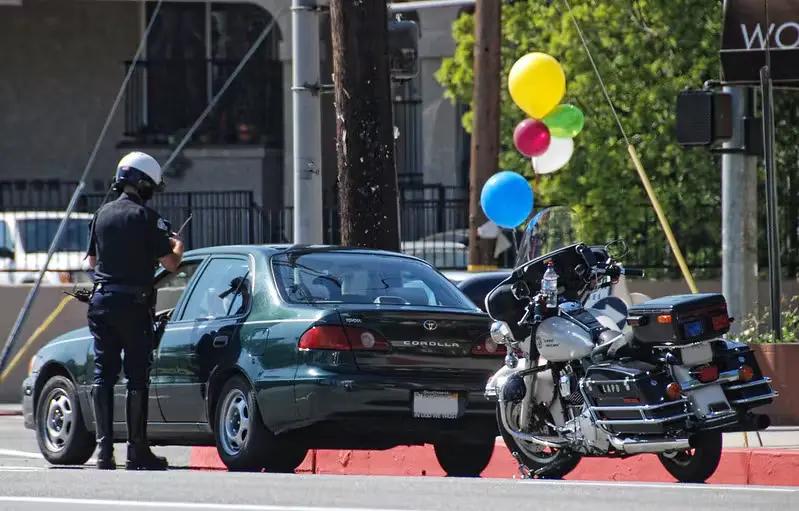
If you’ve been hit with a speeding ticket or other moving violation, you’ve probably seen your insurance rates spike. At that point, after launching a few fleeting expletives, you probably asked the same thing that every other person in your shoes has asked, “How can I get this speeding ticket off my record?”
While it is very possible to keep tickets off your record, it is not as easy to erase them after the fact. Many people pay their tickets without considering their driving record and other collateral consequences of building up points and/or violations. After that insurance bill shows up, or after they have racked up a few violations and find out that their driver’s license is in jeopardy of being suspended, they finally realize the importance of proactively keeping the tickets off your record.
And take it from us: there are definitely ways to keep your record clean, or at least less dirty, without driving like a perfect saint.
Fight the ticket before it goes on your record
An ounce of prevention is worth a pound of cure, right? That’s what my granny out in the wild farmlands of northeastern Missouri would say.
It’s totally understandable that a lot of people aren’t in too much of a rush to want to investigate how to fight back against their ticket, how to contest it in court, how to hire a lawyer, what the odds of success are, and how long they will have to be at the courthouse. It’s extremely stressful to deal with a ticket on your own or to blindly hire someone off a five-second Google search with no guidance other than a few positive reviews. And if you have a full-time job, you probably can’t afford to ditch your family and employment to spend the day at the courthouse fighting a single ticket.
So what happens? Many will cave and pay the amount on the ticket without fighting back. The National Motorists Association estimates that just 5% — one out of every 20 people — contest their tickets. A recent Des Moines Register article noted that just 2.7% of people in that area contested their automated traffic enforcement (camera) tickets, while 83% of people who did so in Council Bluffs, Iowa won.
Take a moment and reread those stats. “Whoa,” you should be saying. While Iowa may not be reflective of the nation as a whole, we’d bet that those statistics are not massive outliers from the general population — the success rates on fighting back can be extremely high (especially hours) yet most people consider their ticket a foregone conclusion and concede defeat.
And what happens when, like the vast majority of people, you don’t fight back? Your insurance rates go up — you paid for the ticket, now you will keep paying for that ticket for years.
Hiring a lawyer is the least stressful route for most people.
If you don’t have countless hours to do it yourself, hire a lawyer. You can find them all over Google or Yelp, hoping that you don’t hire someone who is better at marketing than lawyering, or you can take the easier route with a money-back guarantee and hire one through our appropriately named app: Off The Record. Get it? It’s funny because we keep the ticket off your record.
Did we say money-back guarantee? Yep. If you don’t win, you don’t pay. Our lawyers are so good at keeping tickets off the record, that we stand behind them and foot the bill in rare instances when they come up short.
And that’s what it’s really all about folks: be proactive about keeping your driving record clean and you won’t face jacked up insurance rates, plus you won’t have to worry about license suspensions and missing work. We connect you with a lawyer that will analyze your ticket for the best way of responding: fight to beat it outright or negotiate a deal for a lesser sentence that avoids the ticket going on your record (such as a deferral or traffic school).
How does a lawyer keep a ticket off my record?
As all lawyers would say, it depends. It depends widely based on the type of speeding ticket, how you were caught (radar, speed camera, some yokel cop chasing you with a Crown Victoria will monitoring his own speedometer), and local aspects such as first-time offender programs and local conviction rates.
In most jurisdictions, there is sympathy on behalf of the court and prosecutor, for first-time offenders. In California, there is a traffic school option that can wipe out one ticket every 18 months, so long as the offense is not too severe, such as street racing or driving under the influence. In Washington, you can defer conviction on a ticket every seven years, meaning you take traffic school courses and keep a clean record for a year and the ticket will disappear. The various states, counties, and even a few cities, have different rules so you’ll need to consult with your local attorney on your best option moving forward.
Have you considered simply winning?
There is, of course, the option of winning. Beat the speeding ticket outright and you will not have to deal with pesky points or extra lines on your driving record. Again, the strategy for being the ticket will vary greatly based on your particular facts. Maybe your ticket was filled out incorrectly or your car was not described with sufficient particularity, as many states and cities require. Maybe that particular cop has a reputation for missing court, which only the local experienced lawyers know about. Or maybe it was a camera ticket and you weren’t driving at all – in many places simply swearing that you were not the driver is enough to get the ticket tossed. (Sadly, that is not the case in New York City — in this fine town, the registered owner of the vehicle gets to ticket no matter who was driving.)
Whatever your strategy, being proactive about your tickets and keeping them off your record in the first place is your best bet for keeping a clean record.
Can I get a ticket removed after I have already pleaded guilty?
You not going to like the answer to this one. You can get the ticket removed, or at least the sands of time can. Most tickets drop off your record after a few years, though it varies by state, of course. In Maryland, the waiting period is three years, unless your license was suspended. And as of 2017, you no longer have to ask the state to wipe the ticket — it is done so automatically.
But if your ticket has not reached its expiration date, the odds of getting it removed from your record are slim, though as always, we will repeat the maxim of consult with a local attorney because rules vary by state and locality. To use a couple of familiar examples, both California and Washington require you to ask for the traffic school-deferment option before a conviction is entered as part of a plea deal — failed to take that plea and you’ll be stuck waiting years for the ticket to drop off your record.
Why? Prosecutors and courts aren’t offering those deals out of the goodness of their hearts. They offer these deals so they don’t have to go through the rigmarole of a trial. Instead, by pleading guilty, you make their job easier so they are willing to give you a break in return if you are first-time offender.
If you are waiting for your ticket to drop off your record, and your primary concern is insurance rates, note that every insurer treats tickets differently. While one insurer might not even consider a first-time speeding ticket when setting rates, other insurers may jack rates immediately. And some will only consider moving violations from the last 3 to 5 years, regardless of whether the offense is still on your record, reports NerdWallet.
Get started with a few taps and a picture.
Most people cave and pay the ticket because they are short on time and need the convenience of getting the ticket behind them. We have flipped the script, making it easier to fight the ticket than to pay it.
How? Download our app for iOS or use our website to get started. With a few taps in the app or on the website, plus a picture of the ticket, we will connect you to a local attorney in your area that is experienced in fighting back. We offer a money-back guarantee: if you do not win, you do not pay. We can do this because our attorneys are extremely successful. For example, in Washington state, our success rate is over 97% on tickets.
Erasing a ticket after it has been entered is extremely difficult, if not impossible, unless you want to wait out the clock. The best way to keep your record clean is with an ounce of prevention, otherwise known as Off The Record.
Image Credit: Chris Yarzab CC BY-SA 2.0

 Off the Record