The scariest road in America is a twisty interstate that traverses the vast Appalachian mountains of West Virginia. The West Virginia Turnpike, as it is known, is unbelievably gorgeous in great weather - more than a hundred bridges bring you from mountaintop to mountaintop, twisting and turning, seemingly solely for the purpose of showing off the picturesque scenery and brilliant engineering behind the roads. That same road though, at highway speeds, in a foggy, rainy, icy slush is downright terrifying. And if you want to exit and wait it out … good luck. The exits are few and far between, and the severe descending grade off the exit feels like you are driving off of a cliff - which you might be, given the thick, milky fog.
Is the drive worth it? Absolutely. Should you do it in bad weather? If you have a choice, no. But if you must, the rules there are the same as they are when driving in poor weather anywhere: slow down, wake up, and drive with caution. Rain, snow, sleet, hail, fog, and wind all change the dynamics of driving severely and for inexperienced or unaware drivers, can bring a high risk of injury or death.
Types Of Severe Weather & How It Affects The Road
Fog
Fog, while a beautiful phenomenon, is probably the biggest pain to drive in. It usually comes out of nowhere - it sets for a few hours, floats in and out, and just when you think you’re about to clear it, you hit a heavy patch and can’t see beyond your front bumper.
What do you do when you hit a foggy patch? Slow down a bit - though don’t do something crazy like go 25 mph in a 75 or you’ll risk getting rear-ended. If you must go that slow due to zero visibility, turn on your flashers, and if you can see the shoulder, consider pulling completely off the road and waiting for the fog to pass. Sometimes, you can’t see enough to do even that. If so, slowing down, turning on your low-beam headlights (high-beam lights are more likely to reflect back off the fog and reduce visibility) and emergency flashers, and following the driver ahead of you at a farther-than-normal stopping distance are good starting measures until you can safely pull off and wait it out.
Rain
Stop us if you’ve heard this one before: rain increases your stopping distance. Why? Rain lubricates the breaks (bad thing) and the road, reducing your tires’ traction. If it hasn’t rained in a while, built-up oil and grime block the road’s surface like clogged pores, leaving the rain to pool on the oily surface, which makes driving and stopping even more challenging. Rain is the most common bad weather you’ll see, so if you aren’t used to it by now, you are either a new driver or a Californian. If so, take your car out in the rain and find an empty stretch of road or a big empty parking lot. Accelerate, hit your brakes with plenty of asphalt in front of you, and see what happens. (Hint: you won’t stop quickly.)
How do you survive a torrential downpour while driving? Wipers, lights, and less speed, to start. Slow down and keep more distance between you and the car in front of you. The traditional rule is two seconds’ distance - when they pass a landmark, you should pass it two second later. In rain, make it four seconds’ distance. And like fog, if you can’t see because the rain is too thick, pull over and wait it out.
Snow and ice
Kids love snow. Santa does too. Drivers and adults hate it. Why? The second the snow starts, the bad drivers make themselves known. Accident rates spike, as do commute times.
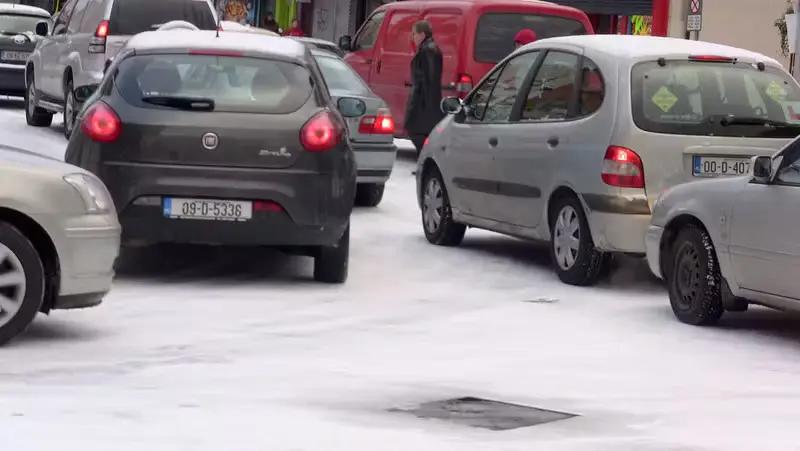
How do you avoid becoming another crash statistic? If you have never driven in the snow or ice, head to a parking lot and see how driving on patches of snow and ice affect your car. You’ll notice that your traction is awful, you are likely to spin out, stopping is really difficult to do, and you may even do an accidental donut or two. While driving technique in snow and ice isn’t much different than rain - slow way down, use your wipers and lights - the feel is much different and can vary by car and tire selection, so testing your ride out in a parking lot is a great idea for new and seasoned drivers alike.
Beware of ice patches (also known as “black ice”). These patches form most often on bridges (the wind above and below the roadway cools the the driving surface faster) and where water collects. If you accidentally hit an ice patch, you may slide right through it and end up on the other side, none the worse for wear. But if you start to spin, take your foot off the accelerator and do not brake - giving it gas will spin the tires, while brakes will lock the tires up, potentially hastening your skid. Instead, carefully turn in the direction of the skid. A great piece of advice that old-timers use is to “drive like you have a cup of coffee in your lap” when traversing ice and snow.
Consider your equipment as well: while all-wheel or four-wheel drive is probably unnecessary for all but the most snow-packed rural routes, having snow tires in areas where snow is frequent can greatly reduce your risk of losing traction. Some areas will require or ban (due to roadway damage) snow chains, so check your local laws if snow is a common occurrence.
Driving Tips For Severe Weather Conditions
Practice in a parking lot.
We’ve mentioned this a couple times, but it bears repeating: test your vehicle in a safe, empty parking lot. There’s hopefully nothing to hit, and it’ll give you a feel for how your car does in poor weather. Every car is different, and even some so-called SUVs can perform terribly in bad weather, especially if the wrong tires are equipped - better to find that out now than when the snowy fog comes. Not a single weather event goes by without a Camaro, Mustang, Corvette, or M3 sliding out and colliding with the median - don’t be that guy.
The laws still apply - though the speed limits may not.
What’s the speed limit on this road? The signs are a starting point, but if the weather is turned on you, the real speed limit is likely lower. This is because those limits are set for optimal conditions and most states have an additional speed limit, known as the basic speed limit law: “never drive faster than is safe for current conditions.” That means you can get a ticket for going 25 mph in a 30 mph zone if the weather is bad enough. And it is very unlikely that you’ll be ticketed for not meeting the minimum speed limit if the fog is thick enough.
This rule doesn’t excuse those of you who immediately drop to 15 mph on a highway the moment the sprinkles start - other drivers still hate you. A better strategy is to match the speed of other drivers, or go a little under the speed limit, whichever is slower. If you aren’t comfortable, get off the road and wait it out.
Drink more coffee, turn off your phone, and crank the Village People.
While you should already have your phone off (distracted driving is bad, mmkay?), it is doubly important to knock it off when the weather isn’t cooperating. You need to be very alert - coffee and catchy music is a great start. Driving in weather is also an endurance sport: the more you have to drive at full attention, constantly scanning the scenery and squinting to catch a glimpse of the road lines through the foggy sleet, all the while being lulled by the sound of rain tap, tap, tapping on the glass, the more quickly you will tire out. Take breaks and recaffeinate or - you guessed it - pull over and wait it out. Cranking absurdly campy tunes, like “Sex Over The Phone” is a guaranteed way to laugh your way out of a tired lull.
Practice Safety First
We’ve all done things that, in retrospect, were incredibly stupid and dangerous. Pulling an eighteen-hour run through Virginia, West Virginia, Kentucky, Indiana, Illinois, Missouri, and Kansas, with the first few hours in foggy, rainy, mountaintop turnpikes? Guilty, more than once. By the time you get there, you totally see leprechauns dancing in the middle of the road. It’s kind of awesome, but really stupid. Dear 25-year-old me: spend the $50 on a motel room and get here safe - a wife, kid, and more dogs and cats then you can count are waiting.
Instead of driving through severely impactful weather, with no special equipment or preparation, like some California-transplanted-to-Virginia eager to go home for the holidays, check your equipment, get familiar with it in a parking lot first, slow down, and take breaks. The world will still be waiting for you when you get there.
This information on this site is provided solely for informational purposes. It is not legal advice. Off The Record is not a law firm, does not provide legal services, and is not a lawyer referral service. The attorney listings on the site are paid attorney advertisements. Off the Record has not evaluated this content for accuracy, completeness, or changes in law. No representation is made here about your specific rights. Off The Record is not a substitute for an attorney or a law firm. Legal advice can only be provided by a licensed lawyer.
Image credit: William Murphy CC BY-SA 2.0

 Off the Record