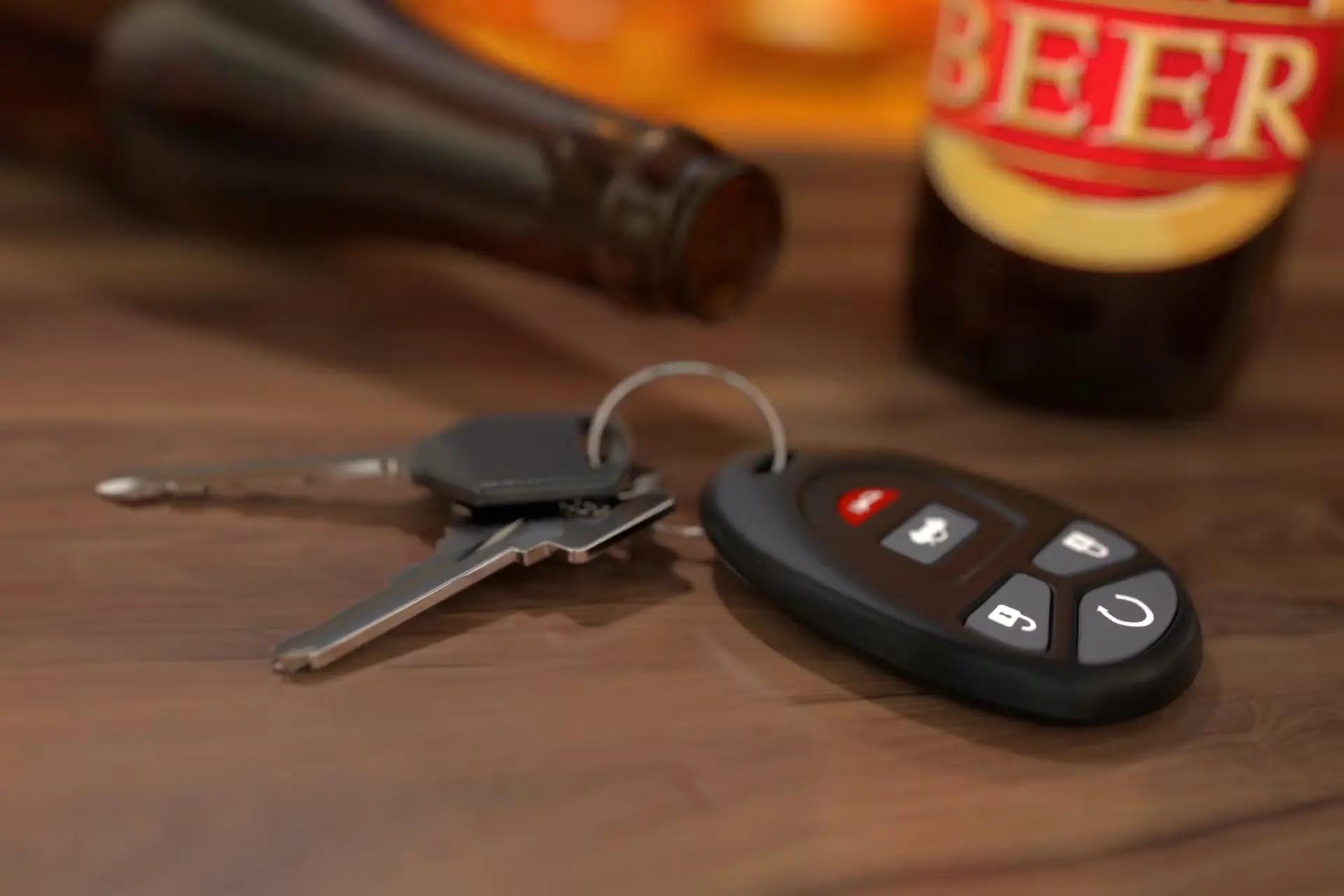
It’s a regrettable mistake that can, and does, change your life forever. It didn’t feel like a big deal: it’s only a couple of miles, the roads are empty, and you’ve driven that way many times before. But before you know it, something halted your serene journey: at best, blue lights flashing from behind, at worst, a collision.
What comes next? Likely, an interrogation by the police. Perhaps a few tests of your coordination and ability to hop on one foot while barking like a dog - or whatever the field sobriety tests consist of today. Then blood or breath, a probable night in jail, and a court date. Oh, and charges, legal expenses, a possible conviction, fine, jail time, insurance hikes, license suspension, alcohol education courses, and maybe an ignition interlock device. That’s about it. Maybe.
Effects Of Drinking And Driving
We’re not doctors, but we have had a few drinks. And the effects of alcohol are pretty well-documented at this point, even if you are a teetotaler. The biggest, and most ironic, is impaired judgment: alcohol interferes with your ability to comprehend and concentrate enough to make rational decisions that would otherwise say, “This is a really stupid idea.”
Hence, the driving part. This is why it is so important to plan ahead when you’re headed out for the night. Because driving to the bars, and parking in a spot where your car will be towed or must be moved, pretty much means you’ll do the stupid thing in a few hours and get behind the wheel. (True story: guys have gotten DUIs while sleeping in the back seat: you don’t even have to move the vehicle in some places - mere “care and control” of the vehicle will suffice.)
Once you get behind the wheel, you can count on slower reflexes. You might notice that your eyes and visual perception seem a bit laggy - and when you are driving, you habitually scan the road, so your delayed and impaired vision will be much more noticeable than when you were staring into that guy’s eyes fifteen minutes earlier in a dark cantina.
Tracking and depth perception are going to suffer as well. This is why those roadside sobriety tests will often include eye-tracking (where they make you follow a pen with your pupils) and instructions to lift your foot “six inches” off the ground. Coordination typically suffers post-drinking too - so when they tell you to put your foot down, then walk in a straight line, you’ll probably have some trouble if you’ve been drinking.
Of course, this is the perfect time for a mandatory interlude and note on the fact that field sobriety tests are far from an exact science. While booze is one explanation for why someone may be unable to walk in a perfectly straight line, or judge a distance of six inches from the ground while balancing on their aft foot, other explanations could include: exhaustion (most DUI stops happen at night, during peak drinking time, but some people are just tired), poor vision, or just plain clumsiness and nerves. The only field sobriety test that seems to have a strong scientific foundation is the horizontal gaze nystagmus test (the “follow the pen with your eyes” test). Intoxicated people will have difficulty tracking the pen and their eyes will spasm or twitch when their pupils reach the furthest left-right extremes.
Consequences Of Drinking & Driving
Let’s start with the extra-legal consequences first, since quite frankly, those are the most overlooked. First, you’ll probably lose your license. In California (the California government breaks a lot of this down here), in most cases, the officer will give you a little pink paper that tells you that you have a limited time to appeal an automatic suspension with the DMV. Wait more than the limit and your license can be suspended. File an appeal and, well, your license will probably still be suspended, but you’ll at least get a few more weeks to prepare. Of course, if you are innocent and can prove it, you might be able to beat the suspension.
Wait, prove it? In a way, yes. Your license is suspended by the Department of Motor Vehicles in an administrative action and hearing - not a court of law. This means you have no right to an attorney - no public defender, at least, but you can bring an attorney with you - and it won’t be a real judge that hears your DMV appeal. Instead, a bureaucrat will likely be the prosecutor and judge.
If you drive to work - or worse, drive for work, as a car salesman might, you could lose your job, though in some states, you may be able to get a restricted license for driving to, from, and during the course of your employment. In California, you can apply for this “critical needs” license - this is available under California Vehicle Code 13202.5(c). Speaking of jobs, once you have a criminal conviction on your record, it can follows you: employment background checks, applications to schools and professional licensure applications (like a state bar or medical board) will all turn up your embarrassing conviction and may result in denials for employment, school, or licenses.
Assuming you don’t beat the license suspension and criminal conviction, your insurance rates can go up - a suspension and special SR-22 insurance (high-risk insurance) will likely cause those rates to skyrocket, even for minimal liability insurance.
And now, finally, we get to the criminal penalties. Again, using California as an example:
- First offense: up to 6 months in jail, up to $1,000 in fines plus administrative and court fees, an alcohol education course, and possible ignition interlock device.
- First offense with injury: 16 months to 16 years in prison, up to $5,000 fine plus restitution to the injured party, longer alcohol education course, and one-year suspension.
- Second offense: 96 hours to 1 year in jail, up to $1,000 in fines, longer alcohol education course, and either a year of ignition interlock or a one-year suspension plus one-year partial (to/from work/home) suspension.
- Third offense: 120 days to 1 year in jail, up to $1,000 in fines, longer alcohol course, 2 years ignition interlock or three years outright suspension.
- Fourth offense (a felony): 16 months to 3 years in prison, up to $1,000 in fines, longer alcohol education course, and up to 5 years license suspension.
Oh, and there are enhancements for high blood-alcohol content or refusal to take a blood or breath test.
Curious to understand California compares to your state? While California is pretty harsh on drunk drivers, no state takes it easy - though some might argue that Montana is pretty lax. According to Mothers Against Drunk Driving (MADD), Montana is the most lenient state in the country for drunk drivers - no ignition interlock, no DUI checkpoints, no penalties or expedited warrants for blood and breath test refusals, and no administrative license suspensions.
What is The Legal Limit For Drinking & Driving?
Everybody knows this one, right? 0.08! Except, that’s not exactly it.
In most states - 49 of 50 - your gut reaction was right: 0.08 is the “per se” limit for those over 21 years of age. In Utah, the limit is 0.05. A “per se” limit means that the law considers you too drunk to drive as a matter of law with that level of alcohol in your blood, no matter how impaired or not you may seem. (We’ve all known people who can and cannot handle intoxicants.)
If you are under 21, your limit may be 0.00 - any alcohol at all, in other words. Arizona, Alaska, and Illinois are just some of the states with a 0.00 limit for minors. New Jersey has a limit of 0.01. Most of the states set the limit for minors at 0.02, which is good for those who take cough syrup or who had a little sacramental wine, we suppose.
And we’d be remiss not to mention yet another limit: the enhanced penalty limit. In most states, if you have an extremely high blood-alcohol level, you are subject to a harsher sentence if convicted. Some states, such as Arkansas and Mississippi, do not have an enhancement level, while most states set theirs between 0.15 and 0.20.
Finally, we should add a couple of notes on the fuzzy lines of impairment. In some states, such as California, a person can be convicted of driving under the influence, no matter what their blood-alcohol level is - they just need proof (beyond a reasonable doubt) that the person was impaired. For people who get drunk or tipsy very easily - such as those of Asian descent who have a differently coded gene (genes that code for inactive Aldehyde Dehydrogenase, if you want to get nerdy about it) that impairs their ability to metabolize alcohol - even a single drink can result in a conviction. And don’t forget other intoxicants: weed, pills, patches, powders. Any intoxicant that impairs driving can result in a conviction.
Can You Refuse the Blood or Breath Test? What About Field Sobriety Tests?
All of this talk of legal limits and substances probably begs another question: can you refuse the test? In most states, you will be offered a blood or breath test (or your choice of either). If you consent to the test, it will be carried out and, depending on the results, you may be cleared of all criminal charges. If you refuse the test, the penalties vary, but here are some examples:
Furthermore, if you refuse a test, in many states - Montana included - the refusal is itself admissible as a rebuttable inference of guilt. In other words, the judge or jury is allowed to infer that you are guilty because you refused, though you can present evidence to the contrary.
One more very important distinction must be made: in many states, police officers will carry a pocket Breathalyzer (known as a Preliminary Alcohol Screening (PAS) device). This is not the same as the breath tests required by law - it is a less accurate, preliminary test, and you are allowed in most states to refuse to take the roadside-pocket version of the test.
If you do refuse a blood or breath test, will you get away with driving drunk? Is it worth it? The calculus varies by state - in some states, the penalty for refusal may not be as bad as a DUI conviction, and inference or not, a conviction is far more likely with evidence and blood-alcohol levels. Good luck making that determination while under the influence, in other words.
Also, it should be noted: in many states and counties, a prosecutor and judge will be on standby for overnight calls from police officers who suspect DUI. If you refuse to submit to a chemical test in those jurisdictions, the officer can go to the prosecutor and judge for a warrant to obtain a forced blood draw - meaning you get the penalties for refusal and they might get the evidence to convict you as well.
We’ve also talked a lot about field sobriety tests. Refusal on those is not as much of an issue as the blood or breath tests, and in fact, in some states, you are perfectly within your rights to say “no thanks.” The purpose of field sobriety tests generally is to gather evidence to convict you, while the only way they could help is if you absolutely ace them and the officer decides that they maybe didn’t smell alcohol on your breath.
Drinking And Driving Statistics
Quick: name the most studied and statisticized criminal offense in America. If you said driving under the influence, you’re probably right, but we don’t actually have the numbers on any other crimes to back that up - we’re car law people. We do, however, have a ton of numbers on DUIs.
According to data from the U.S. Department of Transportation, National Highway Traffic Safety Administration (NHTSA), there was an alcohol-impaired traffic fatality every 48 minutes in 2017. That’s too many. In fact, 10,908 people died in alcohol-impaired crashes in 2017 - a bad number, but far from the all-time high in recorded history. The figures go back to 1985, when the number was an astonishing 18,125, or 40% of all crash deaths, involved a driver with a 0.08 or higher blood-alcohol reading. In terms of percentages, the percentage of crash deaths tied to drunk drivers has actually pretty steadily decreased since then, to a low of 29% over the past few years.
Here’s a better stat: two minutes and $20. It’s how much ride home from an app would cost. Given the thousands of dollars in fines, legal fees, insurance hikes, and the thousands of deaths from drunk drivers each year, it’s probably worth the cost of a ride hail.
Teen Drinking And Driving
It is an eternal truth that, the younger you are, the more invincible you think you are. And the more invincible you think you are, the poorer your judgment is when it comes to really dangerous stuff. Add in a few pumpkin ales, and “I got this” becomes “I caught a case.”
But here’s some good news: according to the CDC’s statistics, teen drinking and driving declined by more than half from a peak of more than twenty percent in 1991 to 2011, when only ten percent of teens admitted to driving while intoxicated. (We won’t talk about other substances - weed, pills, powders, etc., except to note that, according to a survey by Liberty Mutual, a third of teens believe they drive better while under the influence of marijuana. Yikes!)
Legally speaking: teenagers need to be aware of one thing: zero tolerance. As we mentioned when discussing legal limits, in some states any alcohol whatsoever is a DUI for a minor. According to the California Courts’ website and Maryland DMV, a single teaspoon of cough syrup can put a person at 0.01 - the legal limit in New Jersey and over the limit in many other states. And while you may feel embarrassed or afraid to ask for a ride home after a few swigs of cough syrup or, heck, beers at a party, know that a DUI charge is a heck of a lot more embarrassing and crippling to your future.
You Probably Need a Lawyer
If you’re reading all of this, you or a loved one probably just had a run-in with the law. Or you googled, “Can I get a DUI from cough syrup?” (That’s okay, we did too.) The consequences of a DUI arrest are almost indescribably severe: suspensions, incarceration, fines, insurance hikes, criminal charges, and collateral consequences for your career and education are just some examples.
While we’re not here to judge, if you made a poor decision to drive while impaired, it’s time to make the right decision and get your life back on track. That starts with getting an attorney to mitigate the damage you’ll face from a DUI charge. It ends with never doing it again. We may be able to help with the lawyer part: a few taps in our app or our website and we’ll connect you with a local attorney to help you assess your case.
This information on this site is provided solely for informational purposes. It is not legal advice. Off The Record is not a law firm, does not provide legal services, and is not a lawyer referral service. The attorney listings on the site are paid attorney advertisements. Off the Record has not evaluated this content for accuracy, completeness, or changes in law. No representation is made here about your specific rights. Off The Record is not a substitute for an attorney or a law firm. Legal advice can only be provided by a licensed lawyer.
Photo credit: QuoteInspector (CC BY-ND 2.0)

 Off the Record